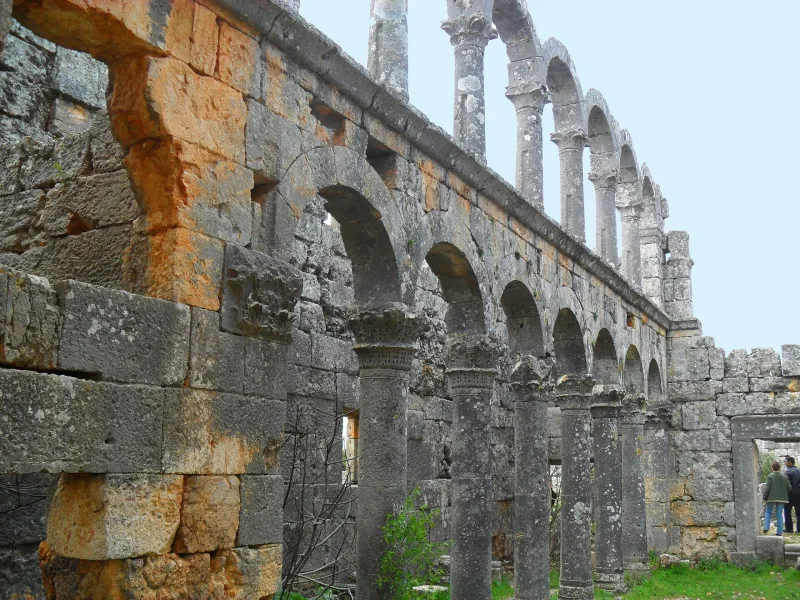
Cambazlı Church — a 5th-century Byzantine basilica in Silifke

Cambazlı Kilisesi: An Early Byzantine Basilica on the Cilicia Trachaea Plateau

Amid the quiet hills south of the Taurus Mountains, just over an hour’s drive from Silifke, stand the ruins of Cambazlı Kilisesi—one of the best-preserved Early Byzantine basilicas in mountainous Cilicia. Its exact ancient name has not survived, but the church’s dimensions (13 by 20 meters), the Corinthian capitals of its columns, and its three-aisled plan suggest that an important Christian center existed here in the 5th century at the intersection of Roman roads between Korikos and Diokesaia.

History

The settlement near the modern village of Cambazlı (Mersin Province, Silifke District) originated as early as the Late Hellenistic period and continued to exist during the Roman and Byzantine periods. The region was called Cilicia Trachaea—“Mountainous Cilicia”—and was dotted with small but wealthy towns and monasteries connected to the coast by paved roads. The basilica in Cambazlı was built in the 5th century, when Christianity had already become the official religion of the Eastern Roman Empire, and Cilicia was one of its most active ecclesiastical regions.

After the Arab raids of the 7th–9th centuries, many such settlements were abandoned; large structures that were not immediately destroyed gradually became a source of ready-made stone for neighboring villages. Cambazlı survived the centuries as a quiet rural landscape, and it was precisely this isolation that preserved the church better than many of the region’s more famous monuments.

Architecture and What to See

Layout of the Basilica

Cambazlı Kilisesi is a classic early Christian three-nave basilica. Its external dimensions are approximately 13 by 20 meters. The main nave is oriented along an east–west axis, as is customary for a Byzantine church: the altar area with the apse faces the rising sun. The side aisles are separated from the central aisle by two rows of columns.

Columns and Corinthian capitals

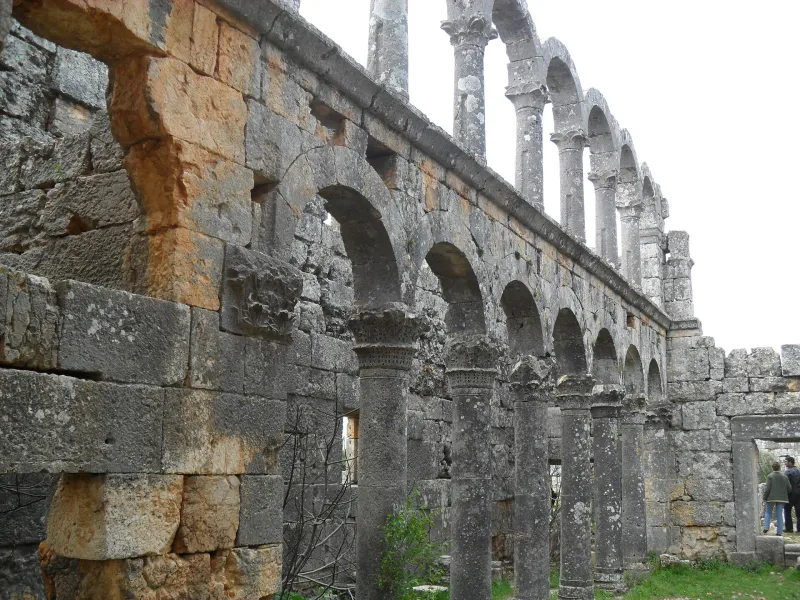
The southern row of columns has survived to this day almost in its entirety—with Corinthian capitals and finely carved acanthus leaves. The northern row, alas, has collapsed: the stones were used for rural buildings. The walls themselves have been preserved to a considerable height, allowing one to clearly imagine the volume of the interior space.

Apsis and eastern portal

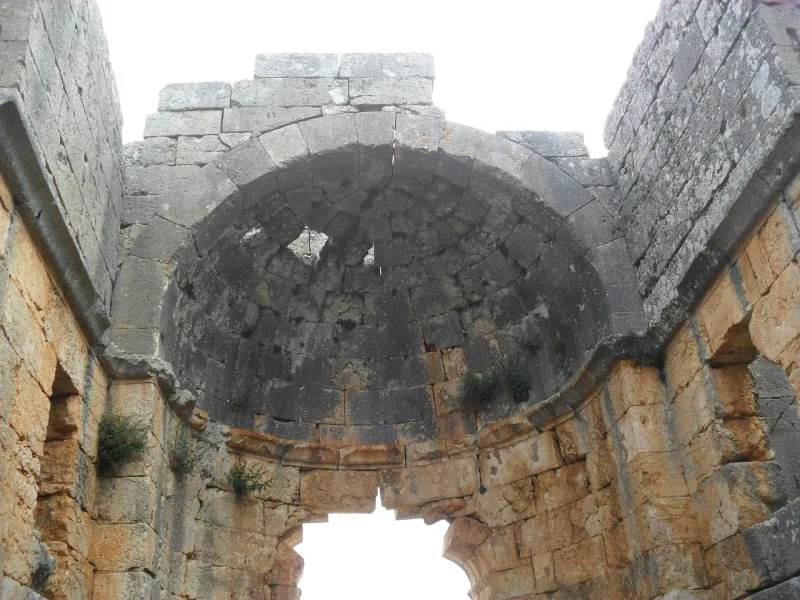
In the eastern part, the remains of a semicircular apse with fragments of masonry are visible. A cross is carved above the eastern entrance—a typical motif of early Christian iconography in the region. Some of the window openings and arches have survived in a semi-ruined state, but they give an idea of the rhythm of the façade.

Surroundings of the Temple

Scattered around the basilica are mausoleums, rock-cut tombs, and cisterns: a typical ensemble for a rural center in late Roman Cilicia. These are the remains of the same settlement that served the church.

Interesting facts

  • The ancient name of the city is unknown: archaeologists refer to it by the name of the modern village of Cambazlı.
  • Cambazlı is an example of how isolation preserves a monument: the temple has survived better than many basilicas in coastal Cilicia precisely because it is located away from major roads.
  • Coricos (Kızkalesi) and Uzuncaburç (Diocaesarea) are located nearby and are connected to Cambazlı by a network of ancient trails.
  • Fragments of capitals and architraves are scattered across the neighboring fields—local residents have used them in the foundations of their homes for centuries.

How to get there

Cambazlı is located in the province of Mersin, Silifke district. It is about 30 km from Silifke via the road through Uzuncaburç (ancient Diocaesarea); about 85 km from Mersin. The most convenient way to get there is by rental car: public transportation to the village is irregular. Coordinates of the ruins: 36.5749°N, 34.0330°E.

It makes sense to combine a trip to Cambazlı with a visit to Uzuncaburç and the Korikos Fortress on the coast—all three sites form a single “Byzantine Cilicia” route.

Tips for travelers

The best time to visit is spring and fall: in summer, the plateau gets very hot, and there is almost no shade over the ruins. Bring water, a hat, and sturdy shoes—architectural fragments lie in the grass, making it easy to trip. There is no fenced-off area or ticket office; admission is free, but this also means there are no amenities: the nearest cafes and restrooms are in Silifke or Uzuncaburç.

Photographers are advised to arrive early in the morning or closer to sunset: the slanting light highlights the texture of the stone and the shadows of the columns. Please respect the rural tranquility and do not touch the architectural fragments—this is a protected monument, even though there are no explicit signs on site.
Your comfort is important to us, click on the desired marker to create a route.
Meeting for minutes before
Yesterday. 17:48
Frequently asked questions — Cambazlı Church — a 5th-century Byzantine basilica in Silifke Answers to frequently asked questions about Cambazlı Church — a 5th-century Byzantine basilica in Silifke. Information about the service's operation, capabilities, and use.
The Cambazlı Church is an early Byzantine three-aisled basilica dating from the 5th century, located on the Cilicia Trachaea plateau in the province of Mersin. It is considered one of the best-preserved early Byzantine basilicas in Mountainous Cilicia: the southern row of columns with Corinthian capitals has survived almost entirely, the walls stand to a considerable height, and the apse, with fragments of masonry, is clearly visible. It was precisely its isolation from major roads that spared the monument from large-scale looting.
Admission to the ruins is free and open to the public. There is no ticket office, no fencing, and no security checks on site. You don’t need to book or buy a ticket in advance—just show up. However, this is a protected historic site, so touching or moving any architectural fragments is prohibited.
The best times to visit are spring (March–May) and fall (September–November). In summer, the plateau gets very hot, and there is practically nowhere to shelter from the sun: the ruins are open on all sides. Early morning or sunset is especially recommended for photographers—the slanting light beautifully highlights the texture of the stone and the shadows cast by the columns.
The exact ancient name of the settlement has not survived to the present day. Archaeologists refer to it by the name of the modern village of Cambazlı. All that is known is that it was founded during the Late Hellenistic period, continued to exist through the Roman and Byzantine periods, and was located at the crossroads between the ancient cities of Korikos and Diokesaia.
Surrounding the basilica are mausoleums, rock-cut tombs, and cisterns—the remains of a rural center from Late Roman Cilicia. Nearby are Uzuncaburç (ancient Diocaesarea) with its well-preserved ancient city and Temple of Zeus, as well as the Korikos (Kızkalesi) fortress on the coast. It makes sense to combine all three sites into a single-day itinerary called “Byzantine Cilicia.”
There are no tourist facilities directly at the ruins: no cafes, no restrooms, and no souvenir shops. The nearest amenities are in Silifke (about 30 km away) or in Uzuncaburç. Before you go, we recommend stocking up on water and food, and making sure your phone is charged for navigation.
The main reason was its remoteness from major roads and population centers. After the Arab raids of the 7th–9th centuries, many Cilician settlements were abandoned, and Cambazlı was no exception. However, it was precisely the village’s quiet, isolated location that slowed the process of dismantling the church for building stone, a process that destroyed most comparable basilicas in coastal Cilicia.
There is no immediate danger, but caution is advised: fragments of architectural elements—such as capitals and masonry blocks—lie scattered among the tall grass and shrubs, and it is easy to trip over them. Sturdy shoes with non-slip soles are strongly recommended. There are no fences or warning signs on site, so visitors must exercise caution at their own discretion.
A tour of the basilica itself and the nearby burial structures usually takes about 1.5 hours. If you’re a photographer or interested in architectural details, plan on spending 2 hours. If you’d like to explore the entire perimeter of the settlement, including the tombs and cisterns, you’ll need more time.
Cambazlı Kilisesi is not listed by UNESCO and is not part of a protected World Heritage site. Nevertheless, it is closely linked historically and geographically to Uzuncaburç (Diocaesarea) and Korikos—important monuments of ancient and Byzantine Cilicia, which also do not yet have UNESCO status, although they are considered significant sites by experts.
User manual — Cambazlı Church — a 5th-century Byzantine basilica in Silifke Cambazlı Church — a 5th-century Byzantine basilica in Silifke User Guide with a description of the main functions, features, and principles of use.
The best starting point is Silifke: from there, it’s about 30 km to Cambazlı via Uzuncaburç. From Mersin, the distance is approximately 85 km. If you’re planning a day trip, it makes sense to combine Cambazlı with Uzuncaburç and the Korikos Fortress (Kızkalesi)—all three sites form a logical circular route through Byzantine Cilicia.
Public transportation to the village of Cambazlı is infrequent and inconvenient. The most practical option is to rent a car, which will give you the freedom to visit several sites in a single day. Set your GPS to coordinates 36.5749°N, 34.0330°E or to the village of Cambazlı in the Silifke district of Mersin Province.
Be sure to bring plenty of water—especially during the warmer months, when the plateau gets very hot. Wear sturdy, closed-toe shoes with non-slip soles: there are architectural fragments scattered among the grass. A hat and sunscreen will also come in handy. The nearest cafes and restrooms are in Silifke or Uzuncaburç, so it’s best to plan ahead.
Come early in the morning or 1.5–2 hours before sunset. The slanting light highlights the texture of the stone, casts dramatic shadows on the columns, and creates the best conditions for photography. Plus, the heat isn’t quite as intense at these times of day. If you arrive in the middle of the day, expect intense sunlight with no shade.
Start with the south aisle: this is where the columns with Corinthian capitals are best preserved. Then proceed to the eastern apse—note the cross above the portal and the fragments of masonry. Walk around the perimeter: rock-cut tombs, mausoleums, and cisterns dating from the same late Roman settlement are located around the basilica. Allow about 1.5 hours for the tour.
Although there are no ticket booths, security guards, or signs, Cambazlı Kilisesi is a protected cultural heritage site. Please do not move or lift any architectural elements, do not carve into the stone, and do not leave trash behind. Please respect the peace and quiet of the countryside: people live nearby.
After Cambazlı, be sure to set aside time for Uzuncaburç (Diocaesarea)—a well-preserved ancient city featuring the Temple of Zeus of Olbia, located roughly halfway between Cambazlı and Silifke. You can end the day on the coast at the Korikos Fortress (Kızkalesi)—the island’s coastal fortress and the ruins on the shore will provide a contrast to the mountain basilicas and offer a chance to take a swim.